
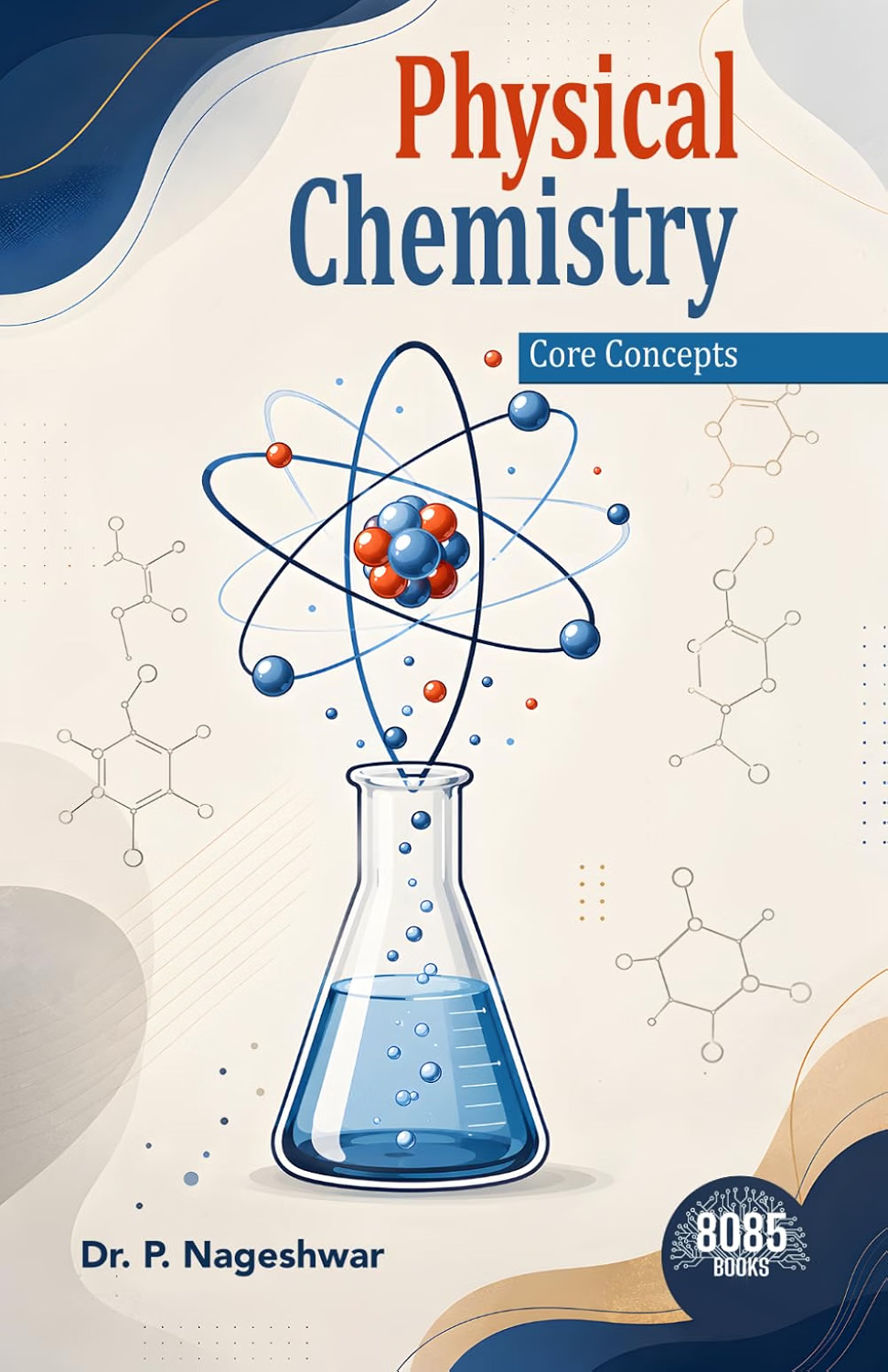
Description
Physical Chemistry: Core Concepts explains why matter behaves the way it does, from the energy released in a galvanic cell to the light absorbed by a molecule in solution. Written for undergraduates, exam candidates, and self-learners, it builds each topic from first principles and keeps the mathematics tied to the chemistry it describes.
The book covers absorption spectroscopy and the Beer-Lambert relationship, electrochemical cells and electrode potentials, the ideal gas equation and its limits, and the laws of thermodynamics. Later chapters extend the picture: synthetic routes in pharmaceutical chemistry, the classical optics and mechanics that spectroscopy depends on, Lewis structures as a visual language for bonding, and a closing look at the quantum and relativistic physics behind chemistry at the atomic scale.
What you will learn
● Interpret absorption spectra for quantitative analysis.
● Calculate cell potentials and predict spontaneity.
● Apply the ideal gas equation and recognize where real gases depart from it.
● Grasp the quantum ideas behind modern chemical theory.
Who this book is for
Undergraduate chemistry and chemical engineering students, competitive exam candidates, and anyone returning to physical chemistry for a clear account of its core principles.
Table of Contents
1. Absorption Spectral Analysis
2. Electrochemical Cells
3. Equation Describing the Ideal Gas State
4. Laws Governing Thermal Energy Systems
5. Synthetic Approaches in Pharmaceutical Chemistry
6. Principles of Classical Optics and Physics
7. Lewis Dot Representations of Molecular Bonding
8. Quantum Theory and Relativistic Physics











Reviews
There are no reviews yet