
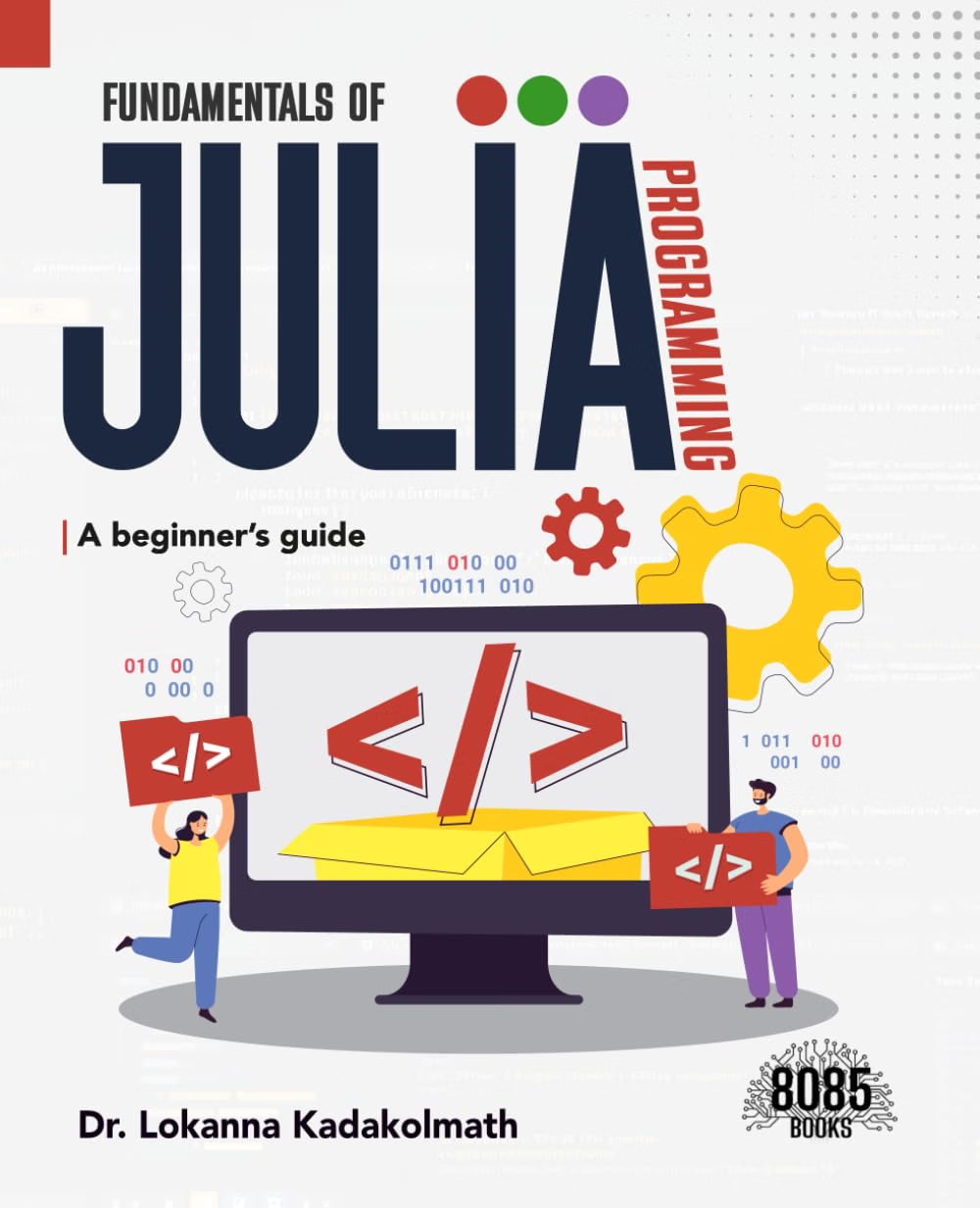


Description
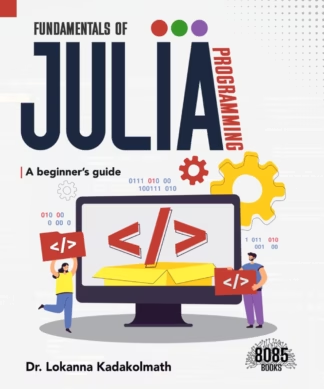
The rapid growth of data-driven technologies, computational science, intelligent systems, and high-performance analytical applications has created a need for programming languages that combine ease of use with computational efficiency. Julia has emerged as a modern high-level programming language that effectively bridges the gap between ease of programming and computational efficiency.
This textbook is designed for undergraduate students beginning their journey in programming and computational problem-solving. It provides a clear, systematic, and practical introduction to Julia, helping students build a strong foundation in programming concepts while exploring Julia’s unique features. The book also supports laboratory experiments prescribed by various universities, making it an ideal reference for both theory and practical courses.
This book aims to help students build confidence in programming, recognize the power of Julia as a modern computational language, and inspire them to pursue advanced studies and careers in computing, data science, scientific research, and software development.
What you will learn
● Apply core Julia data structures to solve problems.
● Generate mathematical plots using Julia packages.
● Import, export, and exchange CSV and JSON data.
● Develop file-based applications for real-world data processing.
● Develop efficient solutions to computational problems using Julia.
Who this book is for
This book is written for anyone taking their first step into programming, including undergraduate students, math and science learners, career-switchers, hobbyists, and self-learners. No prior coding experience is required—only curiosity and a willingness to learn.
Table of Contents
1. Introduction to Julia
2. Getting started with Julia
3. Operators and expressions
4. Control Structures
5. Functions in Julia
6. Collections and Data Structures
7. Strings and Text Processing
8. Working with Files


Reviews
There are no reviews yet