
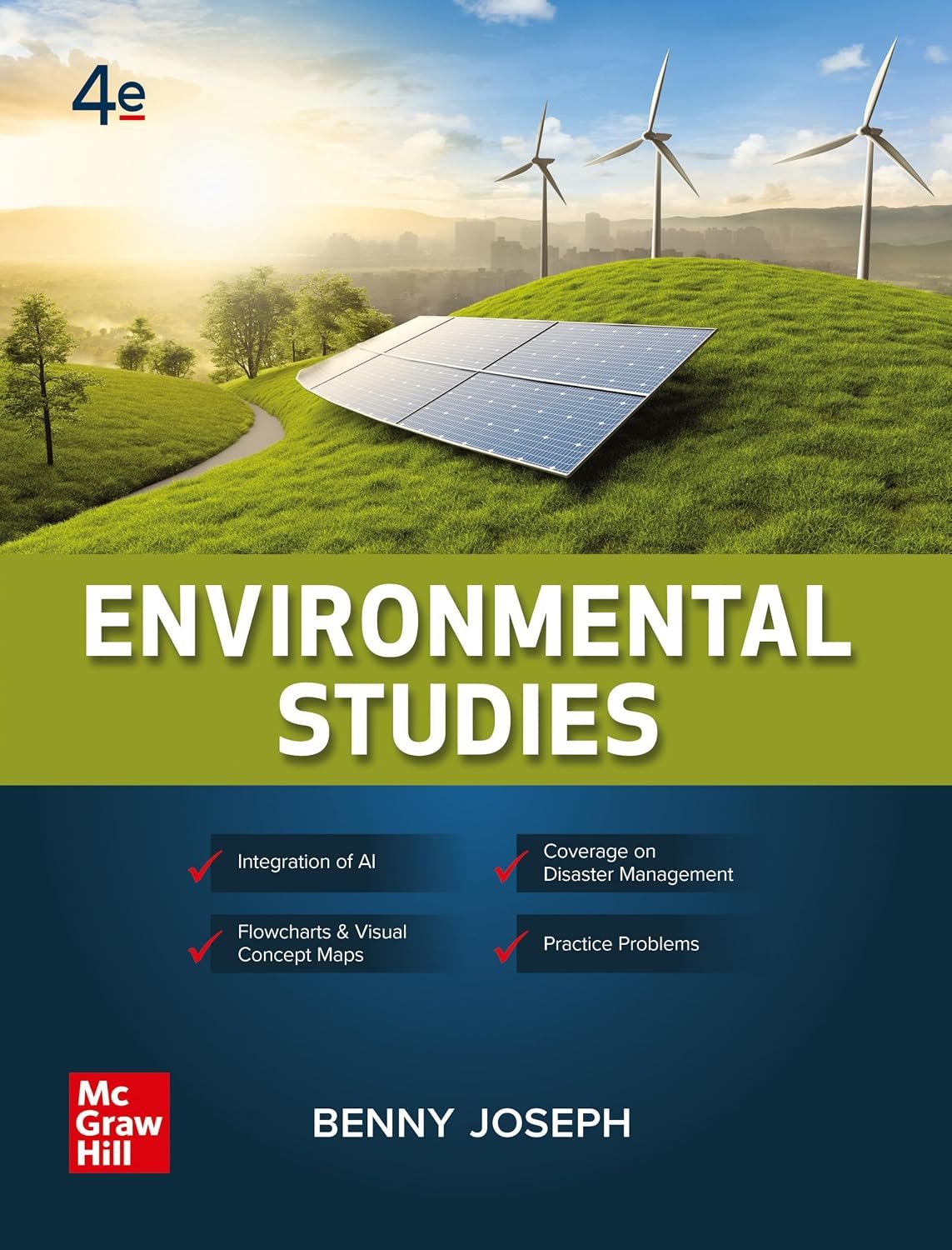


Description
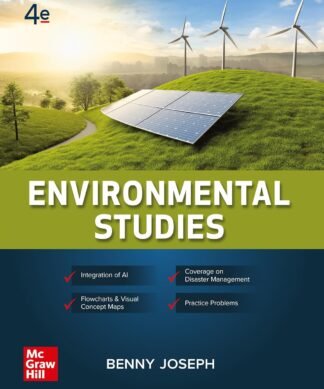
Environmental Studies is an essential textbook for a new generation of engineers innovating within planetary limits. Moving beyond traditional descriptions of ecosystems, this comprehensive edition equips readers with critical analytical frameworks such as Materials Balance, Life Cycle Analysis (LCA), and Circular Economy principles.
Fully aligned with major technical university syllabi, the book reframes environmental knowledge as a core professional competency. Students explore emerging Green Technologies, including Green Hydrogen, E-Mobility, and Sustainable Design, learning to view environmental challenges as opportunities for innovation. Whether designing infrastructure, developing advanced materials, or shaping future energy systems, this book provides the strategic insight needed to transform sustainability from an aspiration into a practical engineering specification.
Salient Features
- Current and Relevant – Updated with the latest global frameworks, including the Kunming-Montreal Global Biodiversity Framework (2022), India’s National Green Hydrogen Mission (2023), and the application of Artificial Intelligence in Environmental Management.
- Analytically Rigorous – Introduces quantitative engineering tools such as the Gaussian Plume Model, Mass Balance Analysis, and Decay Kinetics for real-world environmental problem-solving.
- Student-Friendly Approach – Combines technical depth with clear explanations, worked examples, and step-by-step problem-solving techniques for effective learning.
Table of Contents
- Chapter 1: Introduction
- Chapter 2: Natural Resources
- Chapter 3: Ecology
- Chapter 4: Biodiversity
- Chapter 5: Environmental Pollution
- Chapter 6: Social Issues and the Environment
- Chapter 7: Human Population and the Environment
- Appendix 1: International Conventions and Protocols
- Appendix 2: Glossary
- Index



Reviews
There are no reviews yet